What clinics need to check before calling for a repair.
Chiropractic table elevation issues are among the most common calls we get. Tables take a lot of wear, and over time elevation features can slow down, stop responding, or fail entirely. This can interrupt care, reduce patient trust, and put stress on practitioners trying to keep a schedule.
At MHTT, we handle chiropractic table repairs across Colorado and neighbouring regions, especially along the I‑25 corridor. Most of the calls we get fall into familiar patterns. Knowing the common causes of elevation issues can help clinics diagnose the problem early and prevent bigger disruptions.
Here are the areas worth checking before a full repair is booked.
It sounds basic, but many issues start with a power interruption. If the table uses a plug-in power supply, test the outlet with another device. If the table runs on a foot pedal or wall switch, verify the cable isn’t loose or damaged. If there’s a fuse or breaker inline, check that too. A power issue can look like a full motor failure when it’s actually a simple connection problem.
Many elevation problems trace back to the control switch. These switches wear out over time, especially in high-volume clinics. If pressing the control produces no movement, try gently wiggling the connection point to see if the response is intermittent. If some directions still work (up but not down, or vice versa), the control may need replacement.
If the motor hums or clicks when the control is pressed, but the table doesn’t move, this points to a mechanical issue inside the actuator. If there is no sound at all, it may be electrical. A technician can usually isolate the cause in a few minutes, but knowing whether there’s a motor response helps narrow things down.
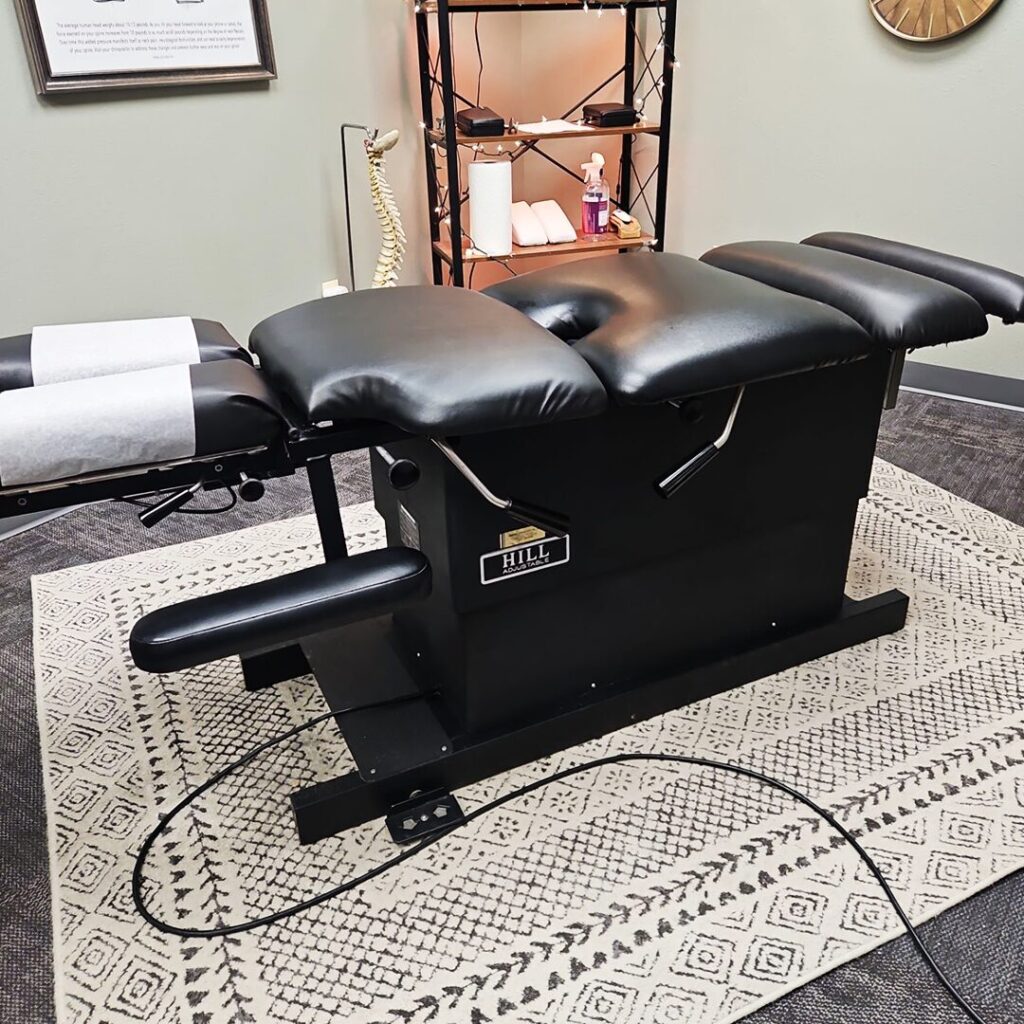
Tables often show signs of stress before full failure. Slower-than-usual movement, uneven lifting, or stopping mid-adjustment can all point to early-stage problems. These may involve the actuator, the guide tracks, or wiring. The earlier these symptoms are addressed, the less damage they tend to cause.
Some clinics modify or lean heavily on tables to suit different treatments. This can wear out motors faster or lead to misalignment. Keeping within the table’s rated load and movement range helps extend the life of the elevation system.
Tables benefit from scheduled maintenance, just like any other equipment. Simple actions like checking wiring insulation, testing range of motion, and confirming responsiveness help avoid emergencies. We recommend a preventative service every six months for clinics using tables daily.
MHTT supports chiropractors, physiotherapists, and wellness clinics across Colorado, including Denver, Colorado Springs, Boulder, and surrounding communities. We’re familiar with all major table brands and parts availability. Our focus is on keeping equipment dependable so practitioners can focus on care. When tables stay healthy, people stay healthy and the business stays strong. Get in touch to book a service call or diagnostic check when it works for your clinic.
Our mission at MHTT is to provide reliable and expert equipment repair solutions to business owners and homeowners. We are committed to restoring functionality with prompt, professional, and high-quality service. By focusing on customer satisfaction and technical expertise, our aim is to ensure that our clients can depend on us to keep their equipment and business running smoothly and efficiently.
Email: info@mhtt.co
Business Hours
Monday – Friday: 8 a.m. – 5 p.m.
Saturday – Sunday: Closed
© 2026 MHTT • All Rights Reserved • Designed & Managed by Schif And The City